"Full, Not Heavy"
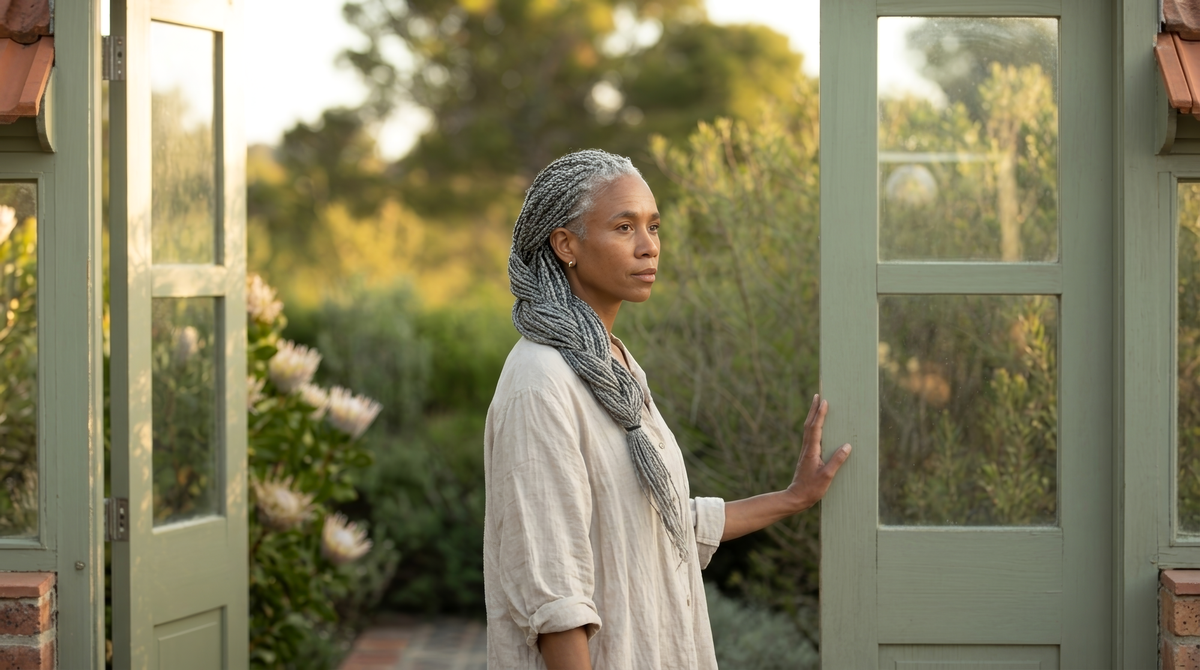
On Miriam’s line, and the difference between a life with a lot in it and a life that is crushing you.
There is a line in the Cape Town Series that I did not write so much as transcribe.
Miriam Sobukwe — old enough to have stopped being polite about the truth — watches Dominique move through her days like a woman carrying water in cupped hands, terrified to spill a drop. And one afternoon she says: “You are not tired because you do too much. You are tired because you do too much that isn’t yours.”
I have thought about that sentence for months, because it names something I spent twenty years getting wrong.
I used to believe exhaustion was a math problem. Too many items on the list. The solution, obviously, was a better list — a sharper system, an earlier alarm, a more ruthless calendar. I optimized. I delegated. I woke at five. And I stayed tired, because I was solving the wrong equation.
Here is what Miriam knows and I didn’t: a full life and a heavy life weigh the same on a scale. The difference is not the amount. The difference is the ownership.
A full life is full of things that are yours. Your work, your people, your appetites, the projects that make you lose track of time. You can carry an astonishing amount of that. People do — they raise children and build companies and write six books — and they are tired in the way a body is tired after good use. The tiredness that sleep actually fixes.
A heavy life is full of things that belong to other people. Obligations accepted to avoid a conversation. Standards you inherited and never agreed to. The endless low-grade labor of managing how you’re perceived. You can carry far less of that before something in you starts to fail — and no amount of sleep touches it, because the problem was never rest. The problem was that you were carrying someone else’s water and calling it your responsibility.
Dominique’s whole arc — the reason it takes six books and not a pamphlet — is the slow, unglamorous work of going through the load item by item and asking the only question that matters: is this mine?
Most of it isn’t. That’s the part that frightens people. We assume that if we put down what isn’t ours, there will be nothing left — as if our identity were the weight itself.
But that’s the lie the performance tells. It needs you to believe you are the sum of what you carry for others, because the moment you stop, the people who benefited from your carrying have to carry their own. And they would rather you not notice.
I won’t pretend the setting-down is easy. It costs relationships built entirely on your willingness to be useful. It disappoints people who were never your responsibility to keep comfortable. Dominique loses things. So did I.
But here is what’s on the other side, and it’s the thing I most want you to know on an ordinary Wednesday: when you’ve put down what isn’t yours, the fullness that remains stops crushing you. The same week, the same hours, the same long days — and you come home tired instead of depleted. Used instead of emptied.
That is the whole difference. Not less life. Less of other people’s life pretending to be yours.
Miriam pours the rooibos no one asked for, and she waits. She has all the time in the world, because she long ago stopped spending it on things that weren’t hers.
I’m still learning to pour like that. Some weeks I do too much that isn’t mine and I feel it by Thursday. But I know the question now — and the question, it turns out, is the entire practice.
Is this mine?
Ask it about one thing today.
In sovereignty,
Carly